
26 Jun 26
Asthma is one of the most common chronic respiratory diseases worldwide, affecting millions of people and requiring continuous monitoring to maintain symptom control and prevent exacerbations. While regular clinical assessments remain essential, advances in digital health technologies are transforming how patients and healthcare professionals manage asthma between visits. Home monitoring tools, telemedicine platforms, and portable spirometers are making asthma care more proactive, personalized, and accessible.
Telemedicine has become an increasingly important component of modern healthcare, allowing patients and healthcare professionals to communicate remotely through digital platforms. By reducing the need for frequent in-person visits, telemedicine helps improve access to care, particularly for individuals living in remote areas, those with mobility limitations, or patients requiring ongoing monitoring of chronic conditions.
Beyond convenience, telemedicine can support more continuous patient engagement. Digital platforms enable healthcare providers to review health data in real time, identify potential issues earlier, and adjust treatment plans when necessary. This approach can improve clinical efficiency while empowering patients to take a more active role in managing their health.
For people with asthma, telemedicine offers unique advantages. Asthma symptoms can fluctuate over time, and lung function may deteriorate before patients recognize worsening symptoms. Remote monitoring tools help bridge the gap between clinic visits by providing physicians with objective information about disease control.
Telemedicine solutions can support:
Studies have shown that combining remote monitoring technologies with digital communication can improve patient engagement and asthma self-management while providing clinicians with valuable insights into disease progression.
A growing range of digital health tools is now available to support asthma management at home. Depending on individual needs and disease severity, patients may benefit from one or more of the following solutions:
By integrating portable devices into daily asthma management, patients can gain greater awareness of their respiratory health, while healthcare professionals benefit from more continuous and objective monitoring between appointments.
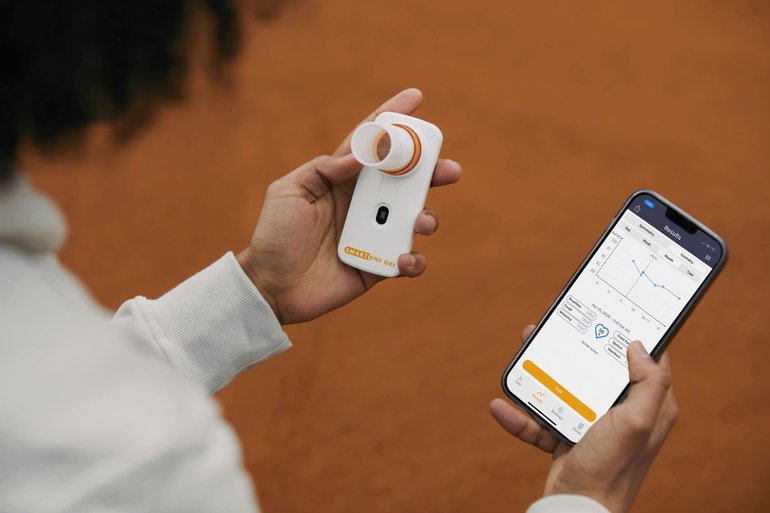
Spirometry is considered the gold standard for assessing lung function in patients with asthma. Traditionally performed in healthcare facilities, spirometry can now be carried out at home thanks to portable, user-friendly devices connected to smartphones, tablets, or cloud-based platforms.
Modern portable spirometers allow patients to measure key respiratory parameters such as FEV1 (Forced Expiratory Volume in one second), FVC (Forced Vital Capacity), and FEV1/FVC ratio. These measurements provide objective information about airway obstruction and asthma control, helping both patients and healthcare professionals detect changes earlier and make informed treatment decisions.
Research has demonstrated that home spirometry is feasible, reliable, and generally well accepted by patients when appropriate training and guidance are provided. Frequent measurements can improve data quality and support long-term monitoring, while remote data sharing enables clinicians to review results and intervene when necessary.
The future of asthma management is increasingly connected as portable lung function monitoring devices are helping transform asthma care from a reactive model to a proactive one. By enabling earlier intervention, improving patient engagement, and facilitating data-driven clinical decisions, these technologies can contribute to better disease control and improved quality of life.
For patients and healthcare professionals looking to enhance asthma monitoring outside the clinic, portable spirometry is becoming an essential part of modern respiratory care. With over 30 years in the field of MedTech solutions, MIR's range of portable spirometers can support accurate, reliable, and convenient lung function monitoring wherever patients are. Visit our product page to explore innovative solutions designed for modern respiratory care.
SOURCES:
National Library of Medicine, reviews 11405314 & 11355136
JMIR Publications
Frontiers in Medicine